

The typical AI for small business cost ranges from $200 to $2,000 per month for essential software tools and platform subscriptions. More comprehensive solutions involving custom implementation or consulting can require upfront investments between $15,000 and $40,000 depending on specific business needs. Successful budgeting should also account for monthly maintenance and staff training to ensure a strong return on investment.
Most small business owners view AI through a lens of skepticism, and for good reason. You are likely tired of hearing vague promises about efficiency while your monthly software subscriptions continue to climb without a clear return on investment. The reality is that AI can be the greatest lever for growth in your company history, but only if you approach the budget with surgical precision. This guide breaks down the actual costs of implementing AI in 2026. You will learn how to categorize your investment into three distinct tiers, understand the specific price points for critical tools like AI receptionists, and identify the hidden costs associated with data security. We also outline how to consolidate your tech stack to avoid common subscription traps. By the end, you will have a practical roadmap for calculating your ROI and selecting the right local expertise to drive your results.
The Reality of AI Budgeting for Small Business in 2026
Small business owners in 2026 face a fragmented landscape when determining a realistic AI budget. Discussion boards on Reddit and professional feeds on LinkedIn are filled with conflicting anecdotes. Some entrepreneurs boast of running their operations on a single $20 ChatGPT subscription, while others report a bloated monthly stack exceeding $900 for a dozen specialized tools. This variance creates a significant gap between adoption and actual impact. While nearly 58% of small businesses now utilize generative AI, only 39% can point to a measurable bottom line improvement.
At ClawDaddy Consulting, we recognize that the true AI for small business cost is rarely found on a pricing page. A subscription is merely a permit to use a tool; the real investment lies in secure integration and strategic workflow design. Without a cohesive AI Strategy, businesses often fall into a cycle of paying for redundant features while leaving their proprietary data exposed. Our scope for this guide covers three critical pillars: generative AI for content and analysis, automation tools for operational efficiency, and the Las Vegas AI consulting necessary to tie these technologies into a secure, profitable infrastructure. Understanding these components is the first step toward moving beyond experimentation and into actual ROI. To begin mapping your specific needs, a complimentary 30-minute discovery session can clarify where your capital is best deployed.
Three Tiers of AI Investment: Finding Your Bracket
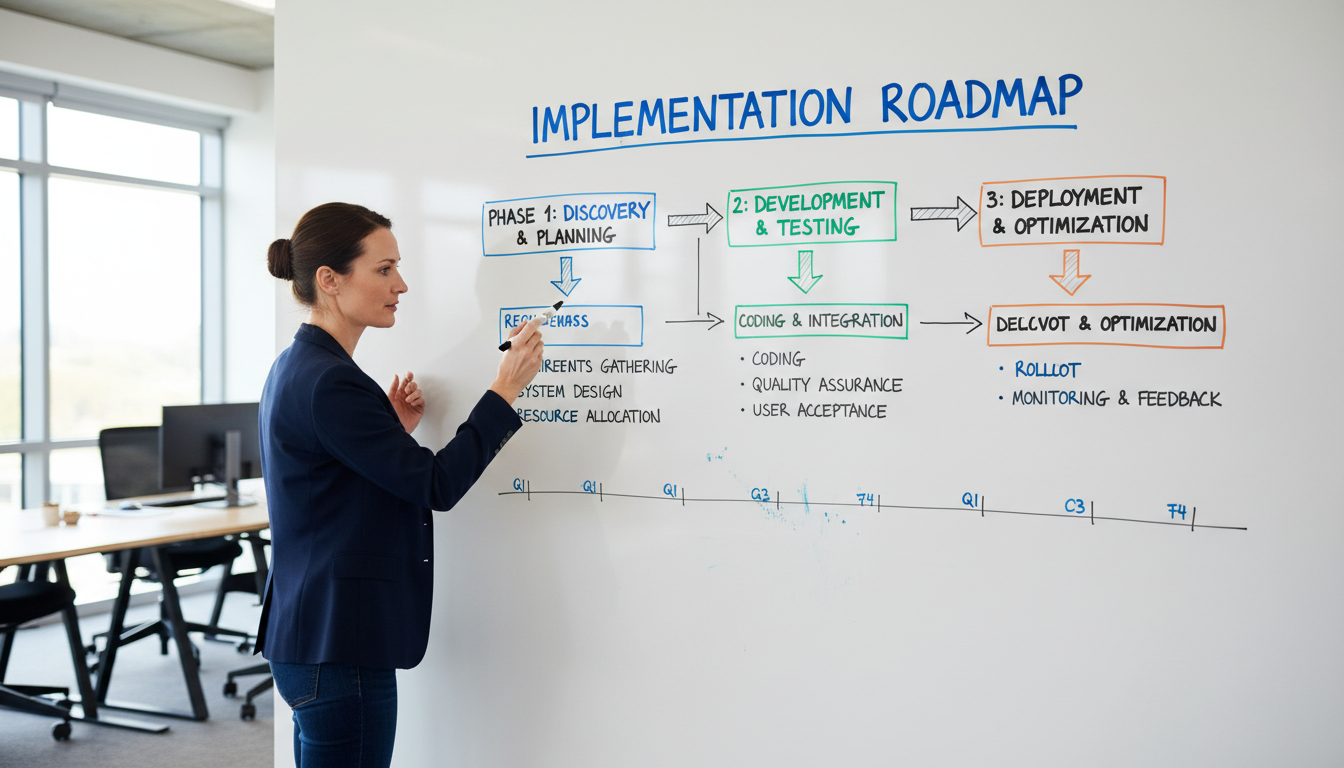
Identifying your investment bracket requires looking past the monthly credit card statement and accounting for the labor hours required to manage these systems. Most companies fall into one of three distinct categories based on their operational complexity and technical maturity. The AI for small business cost landscape is defined not just by what you pay a software provider, but by how much human oversight is required to make that software functional.
### Tier 1: The DIY Approach ($50 to $300/Month) This tier is common for solopreneurs or micro-businesses with fewer than ten employees. You are typically paying for individual licenses for tools like ChatGPT Plus, Claude Pro, or Canva's AI-powered design suite. While the out-of-pocket expense is low, the hidden cost is employee time. Research indicates that simple tool implementation takes 10 to 20 hours of setup and experimentation. If your team is spending hours every week troubleshooting prompts or manually moving data between unconnected apps, your actual expenditure is significantly higher than the $20 subscription fee.
### Tier 2: The Integrated Small Business ($500 to $2,000/Month) At this level, businesses begin deploying specialized agents to handle specific workflows. This includes tools like a dedicated AI receptionist for small business, which often bills based on a per-minute or per-seat model. These tools offer higher utility but require 20 to 60 hours for proper integration into existing platforms like your CRM or calendar. At this stage, many firms encounter the subscription trap: paying for five different tools that do not communicate with each other, leading to data silos and security vulnerabilities.
### Tier 3: Strategic Implementation ($15,000 to $40,000+ Setup) This tier represents a shift from renting software to building an asset. Engaging a Las Vegas AI consulting firm involves a one-time capital expenditure to design custom workflows, clean proprietary data, and ensure cybersecurity compliance. These engagements typically last two to three months. The goal is to consolidate the fragmented tools of Tier 2 into a streamlined, secure ecosystem. While the upfront cost is higher, the long-term ROI is superior; these custom systems usually cost only $100 to $200 a month to maintain afterward and often reach full payback within 12 months through drastic efficiency gains.
Investment Tier | Typical Monthly Spend | Primary Objective | Key Constraint |
|---|---|---|---|
DIY Approach | $50 – $300 | Task-based assistance | High labor overhead |
Integrated | $500 – $2,000 | Functional automation | Fragmented data |
Strategic | $15k – $40k (Setup) | Operational scale | Requires upfront capital |
Moving into a strategic AI Strategy allows a business to stop reacting to new tool releases and start building a competitive advantage. You can determine which bracket fits your current growth trajectory by booking a complimentary 30-minute discovery session to audit your existing technical stack.
Breaking Down the Cost of an AI Receptionist for Small Business
Specific applications like AI receptionists offer a clear window into how these investment tiers manifest in daily operations. These voice agents generally operate under two pricing models: flat monthly fees for set capacities or variable rates based on call volume and minutes used. A basic entry level agent might start at $100 per month, yet costs can scale into the thousands for businesses handling hundreds of daily inquiries.
The true AI for small business cost becomes attractive when measured against traditional staffing. A full time human receptionist requires salary, benefits, and management oversight. An AI agent handles overflow and after hours calls for a fraction of that expenditure. Data suggests that automating these initial touchpoints leads to a 30 to 50 percent reduction in handling time, often resulting in a full payback within four to six months. Ensuring these tools sync with your existing calendars and lead databases is essential for achieving these results. We invite you to book a complimentary 30-minute discovery session to analyze your specific call metrics and potential savings.
The Hidden Costs of AI: Security, Data, and Training

While the direct expense of a voice agent or software license is easy to track, most firms underestimate the true AI for small business cost by fifty percent or more. This discrepancy usually stems from treating AI as a set and forget utility rather than a fundamental operational overhaul. Successful implementation requires addressing three specific hidden variables: data preparation, security protocols, and human training.
Data preparation is the primary hurdle. If your CRM is cluttered with duplicate entries or outdated contact info, a custom AI agent will provide inaccurate outputs, effectively wasting your investment. You must account for 10 to 20 hours of data cleaning for simple tools; this can scale to 60 hours for integrated platforms. Messy data leads to expensive, unreliable AI that requires constant manual correction.
Security presents the most significant financial risk. Without a formal AI Strategy, employees often inadvertently upload sensitive intellectual property or private client data into public Large Language Models. A single data leak can dwarf years of software savings. ClawDaddy Consulting mitigates this risk by integrating Las Vegas AI consulting with robust cybersecurity frameworks, ensuring your proprietary information stays within a protected environment.
Finally, budget for the human element. Expect to allocate 4 to 8 hours of dedicated training per employee to ensure they understand how to prompt effectively and verify outputs. Technology only scales when the team understands its limitations. To identify these hidden overheads in your own organization, you can book a complimentary 30-minute discovery session to audit your current data readiness and security posture.
Calculating Your AI ROI: When Does the Investment Pay Back:

Quantifying the impact of technology requires moving beyond intuition to a clear mathematical baseline. To calculate your specific return, use this simple formula: Multiply the number of labor hours saved per month by the average hourly rate of the employees involved; then subtract the total AI for small business cost, which includes both the subscription and the hours spent on maintenance.
For example, research indicates that content automation can lead to a 40 to 60 percent reduction in production time. If a marketing manager earning $50 per hour saves 20 hours a month using AI, that represents a $1,000 monthly gain. Even after accounting for a $100 subscription and three hours of oversight, the business realizes a net profit of $750 monthly. While standalone tools often show a positive ROI in as little as 2 to 4 months, a broader AI Strategy involves higher initial capital.
A custom Las Vegas AI consulting engagement typically reaches full payback within 12 months. This longer horizon is due to the depth of integration; however, the efficiency gains are far more resilient than those from isolated apps. By automating complex cross-departmental workflows, the total labor hours recovered scale exponentially. You can evaluate your potential returns by booking a complimentary 30-minute discovery session to model these projections against your current operational expenses.
How to Avoid the Subscription Trap and Consolidate Costs
The $890 monthly bill for 15 disparate tools cited in recent LinkedIn trends is a cautionary tale of app sprawl. This fragmentation occurs when businesses purchase niche solutions for single tasks like email drafting, image generation, or transcriptions without a unified AI Strategy. To avoid this, perform a rigorous audit of your current stack. Map every subscription to a specific business outcome; if two tools offer overlapping features like summarization or data extraction, you are paying for redundancy.
Efficient firms focus their AI for small business cost on two or three core power tools that offer robust API extensibility. For instance, a single well-configured Enterprise LLM can often replace five or six single-feature plugins. A Las Vegas AI consulting partner helps identify these overlaps, trimming hundreds in monthly recurring fees while ensuring data stays in a secure, central environment. To baseline your spending and eliminate functional bloat, a complimentary 30-minute discovery session provides an objective audit of your technical infrastructure.
Choosing an AI Consultant in Las Vegas: Local Expertise Matters
Selecting a partner for Las Vegas AI consulting requires more than technical proficiency; it requires a nuanced understanding of the local economic landscape. A boutique firm based in the Valley understands the specific operational pressures of Nevada hospitality, high-velocity real estate, and professional services better than a generic remote agency.
Local experts provide the physical presence necessary to audit how digital tools interact with on-site workflows, an essential step for businesses managing physical assets or guest experiences. This proximity ensures your AI Strategy accounts for regional data privacy standards and specific labor market dynamics. You can baseline your projected AI for small business cost and identify immediate consolidation opportunities by scheduling a complimentary 30-minute discovery session with our team.
Building a sustainable AI budget is about balancing upfront costs with long-term efficiency. Small businesses succeed when they prioritize practical tools that solve specific problems. If you want expert help tailoring these investments to your unique business goals, ClawDaddy Consulting is ready to assist. Crafting a comprehensive AI Strategy is an ideal next step for those who want to avoid common pitfalls. We can help you identify the right solutions to ensure your technology spend drives real results.