

AI lead generation for small business creates a predictable growth engine by automating lead discovery, scoring, and personalized outreach across multiple channels. These intelligent tools help teams focus on high-intent prospects while reducing manual data entry; ultimately improving conversion rates and scaling customer acquisition efficiently.
Most small business owners spend their days chasing prospects who have no intention of buying, or worse, they let hot leads go cold while focusing on daily operations. This manual approach creates a cycle of unpredictable revenue that halts growth and drains vital resources. To build a truly scalable enterprise, you need a system that functions without your constant supervision. This guide explores how to deploy a professional AI lead generation framework. You will learn to implement intelligent capture tools, automate lead scoring to prioritize high-value targets, and execute persistent follow-up sequences that never miss a beat. We will also cover churn prevention strategies and essential data security protocols. By the end, you will have a roadmap to transform your customer acquisition from a series of random acts into a predictable, automated machine.
The Problem with Traditional Small Business Lead Generation
Traditional lead generation for small businesses is fundamentally reactive. Most owners fall into a feast or famine cycle, where they only focus on prospecting when the project pipeline dries up. When client work picks up, marketing efforts stop. This inconsistency creates a volatile revenue stream that makes scaling nearly impossible. Relying on manual outreach means your business only grows when you have the spare time to push it forward; it is a linear approach to a non-linear market.
An AI-driven system changes this dynamic by operating 24/7. It provides the predictability that manual efforts lack by maintaining a constant presence in the market. A common sentiment on platforms like Reddit is that current AI advice for entrepreneurs is frustratingly vague. Critics rightly point out that advice like "use ChatGPT to write faster" is not a strategy; it is a minor efficiency gain that fails to address the underlying lead generation problem.
At ClawDaddy Consulting, our AI strategy services move beyond surface-level tips. This article provides a concrete architectural framework for a repeatable system that captures, qualifies, and follows up with leads without constant human intervention. By integrating Las Vegas AI consulting principles, we help firms transition from sporadic marketing to a structured engine. To see how this framework applies to your specific business model, you can book a complimentary 30-minute discovery session to begin building a revenue machine that does not sleep.
Step 1: Intelligent Lead Capture and Instant Engagement

The engine begins at the point of entry. Traditional lead capture relies on static "Contact Us" forms that act as digital dead ends, forcing prospects to wait hours or days for a human response. In a competitive landscape, this delay is a conversion killer. AI lead generation for small business replaces these passive forms with intelligent, conversational interfaces that engage visitors in real time. These are not the rigid, script-based bots of the past; modern systems utilize Large Language Models to interpret intent, answer technical questions, and guide prospects toward a solution immediately.
A critical metric in this phase is "Speed to Lead." Research indicates that businesses responding to a new inquiry within five minutes are significantly more likely to qualify the lead compared to those who wait even half an hour. AI chatbots ensure this response is instantaneous, regardless of the time of day. For B2B firms, tools like Viserlead can identify visiting companies and initiate personalized interactions based on firmographic data. Meanwhile, HubSpot’s AI features allow B2C and service-based businesses to automate initial triage and scheduling directly within their CRM.
By providing immediate answers, these systems reduce bounce rates and keep prospects on your page longer. They move the prospect from a state of passive browsing to active engagement without requiring a staff member to be glued to a live chat dashboard. This shift transforms your website from a digital brochure into an active sales agent, facilitating the transition into our next phase: automated qualification.
Step 2: Automated Qualification and Predictive Lead Scoring
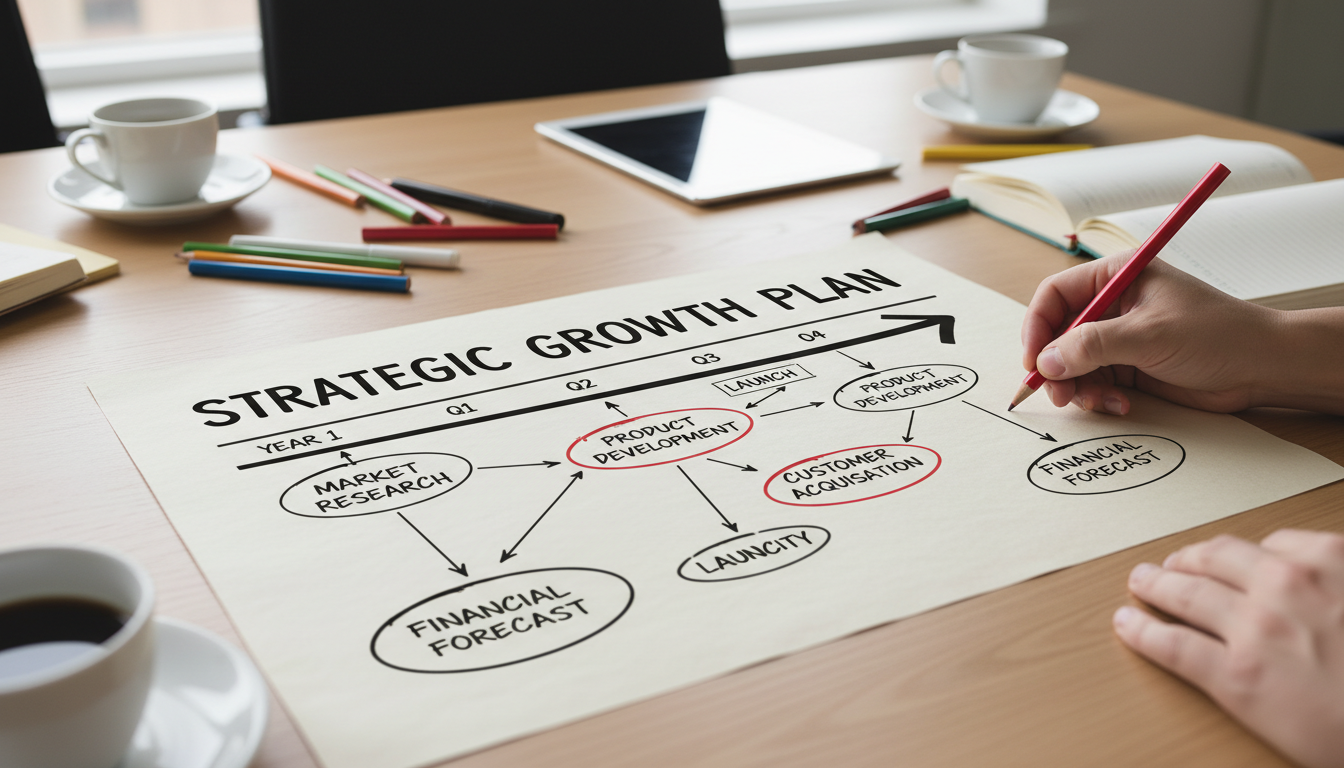
Capturing a lead is only the first half of the equation; the second half is determining if that lead is worth your time. Automated qualification uses AI to analyze a prospect's digital footprint and assign a predictive score. This prevents the common small business pitfall of chasing every notification, which often leads to wasted hours on window shoppers or unqualified inquiries.
To understand how to use AI to get more clients, you must differentiate between two distinct data types that AI models process in real time:
Data Type | Examples | What It Tells The AI |
|---|---|---|
Firmographic | Company size, industry, annual revenue, location | If the prospect fits your ideal client profile |
Behavioral | Time on pricing pages, asset downloads, repeat visits | The prospect's current level of intent or urgency |
AI systems integrate these data points to create a holistic score. For instance, a lead from a mid-sized firm with strong firmographics that has visited your specific service page three times in 24 hours represents a high behavioral intent signal. This triggers an immediate alert for manual intervention. Conversely, a lead from a company outside your service area that only read a single top of funnel blog post is relegated to a lower priority nurturing sequence.
This prioritization is a core component of our AI strategy services. By setting specific thresholds, you can automate the gatekeeping process. This ensures that your calendar, perhaps starting with a complimentary 30-minute discovery session, is reserved for high-value opportunities. In the competitive environment of Las Vegas AI consulting, efficiency is a force multiplier. Transitioning from manual vetting to predictive scoring allows you to scale your client base without scaling your administrative overhead. This creates a clean hand-off to the next stage of the funnel: building the fortune through automated follow-up.
Step 3: Building the Fortune in the AI Follow Up
The most qualified lead in the world is worthless if it sits in a CRM inbox until the trail goes cold; studies frequently show that sales are often made between the fifth and twelfth contact point, yet most small business owners stop after the second attempt. To automate lead generation with ai effectively, you must bridge the gap between initial interest and a confirmed appointment using adaptive follow-up sequences.
Unlike static drip campaigns that send generic messages on a fixed schedule, ai lead generation for sales employs language models to analyze a prospect's reply and adjust the next step accordingly. If a lead asks a specific question about your pricing or security protocols, the AI does not just send the next pre-written email in the sequence. Instead, it parses the query, provides a concise answer based on your business data, and pivots back to the primary call to action. This ensures the conversation remains relevant and the prospect feels heard, rather than processed.
This capability extends to the administrative friction of scheduling. AI scheduling agents can handle the logistical back and forth that often kills momentum. For instance, when a prospect is ready to move forward, the agent can cross reference real-time availability and offer specific slots for a complimentary 30-minute discovery session. This removes the burden of calendar management from the business owner while ensuring the lead is captured while intent is at its peak. Implementing these autonomous workflows is a cornerstone of our AI strategy services, transforming lead generation from a manual chore into a self-sustaining system. Once the meeting is booked and the client is onboarded, the system shifts focus toward long-term retention.
Step 4: Using AI to Keep Customers and Prevent Churn
Sustainable growth depends on the lifetime value of a client; it is far more expensive to acquire a new lead than to retain an existing one. AI lead generation for small business extends deep into the post-purchase lifecycle by utilizing predictive analytics to monitor customer health. By centralizing client communications and transaction history, AI models can identify churn signals that often escape human observation, such as a gradual decrease in platform logins, delayed invoice payments, or a subtle shift in the tone of emails.
One practical application is sentiment analysis on support tickets. An AI agent can scan incoming messages for linguistic markers of frustration or dissatisfaction, escalating those tickets to a human manager before the client reaches a breaking point. Conversely, AI identifies upsell triggers by noticing when a client has successfully hit certain milestones. For example, the system might trigger a personalized check-in or suggest a higher tier AI strategy services package when a client's data volume crosses a specific threshold. This proactive approach ensures you are not just capturing leads, but building a resilient portfolio. For firms looking to integrate these retention layers into their local operations, our Las Vegas AI consulting team specializes in building systems that protect revenue. You can explore these retention frameworks during a complimentary 30-minute discovery session.
The Security Layer: Protecting Lead Data from Leaks

Sophisticated lead generation systems are significant liabilities if they are not properly secured. Many small business owners unknowingly compromise prospect privacy by pasting sensitive customer information directly into consumer-facing AI interfaces. Standard, free versions of popular AI tools often use your inputs to train their models. This means your proprietary lead data could theoretically surface in response to another user's query; a risk that no professional firm should accept.
To mitigate this risk, you must transition from chat-based interfaces to enterprise-grade APIs. These programmatic connections provide strict data privacy agreements that ensure your inputs remain siloed and excluded from global training sets. Furthermore, implementing a basic AI governance framework is essential when handling Personally Identifiable Information (PII). This framework establishes clear protocols for data encryption, access controls, and retention schedules.
Our Las Vegas AI consulting team treats cybersecurity as an inseparable component of AI strategy services. We help you build automation that respects privacy laws and protects your brand reputation. You can review your current data handling protocols during a complimentary 30-minute discovery session to ensure your growth engine is built on a secure foundation.
How to Start Your AI Lead Generation Journey in Las Vegas
Implementing a robust system for AI lead generation for small business does not require a complete overnight overhaul. Las Vegas firms can outpace national competitors by prioritizing speed and precision through a structured, phased deployment.
Timeline | Focus Area | Strategic Objective |
|---|---|---|
Day 30 | Automated Booking | Deploy AI agents to handle scheduling for your complimentary 30-minute discovery session, eliminating manual coordination. |
Day 60 | Intelligent Capture | Replace static forms with conversational interfaces to improve "Speed to Lead" and engage visitors 24/7. |
Day 90 | Predictive Scoring | Integrate CRM data to prioritize high-intent leads and automate churn alerts using AI strategy services. |
By following this roadmap, you leverage Las Vegas AI consulting expertise to scale operations without the overhead of additional headcount. This approach ensures your technical infrastructure remains secure while your revenue engine becomes predictable and repeatable.
Building a predictable lead generation engine with AI allows your small business to focus on growth instead of chasing prospects. While the tools are accessible, configuring them for maximum efficiency requires a strategic approach. If you find yourself wanting expert help to streamline this process, you can learn more about our philosophy and team on our about page. We believe in making technology work for you, ensuring your customer acquisition system remains consistent and effective as you scale your operations.